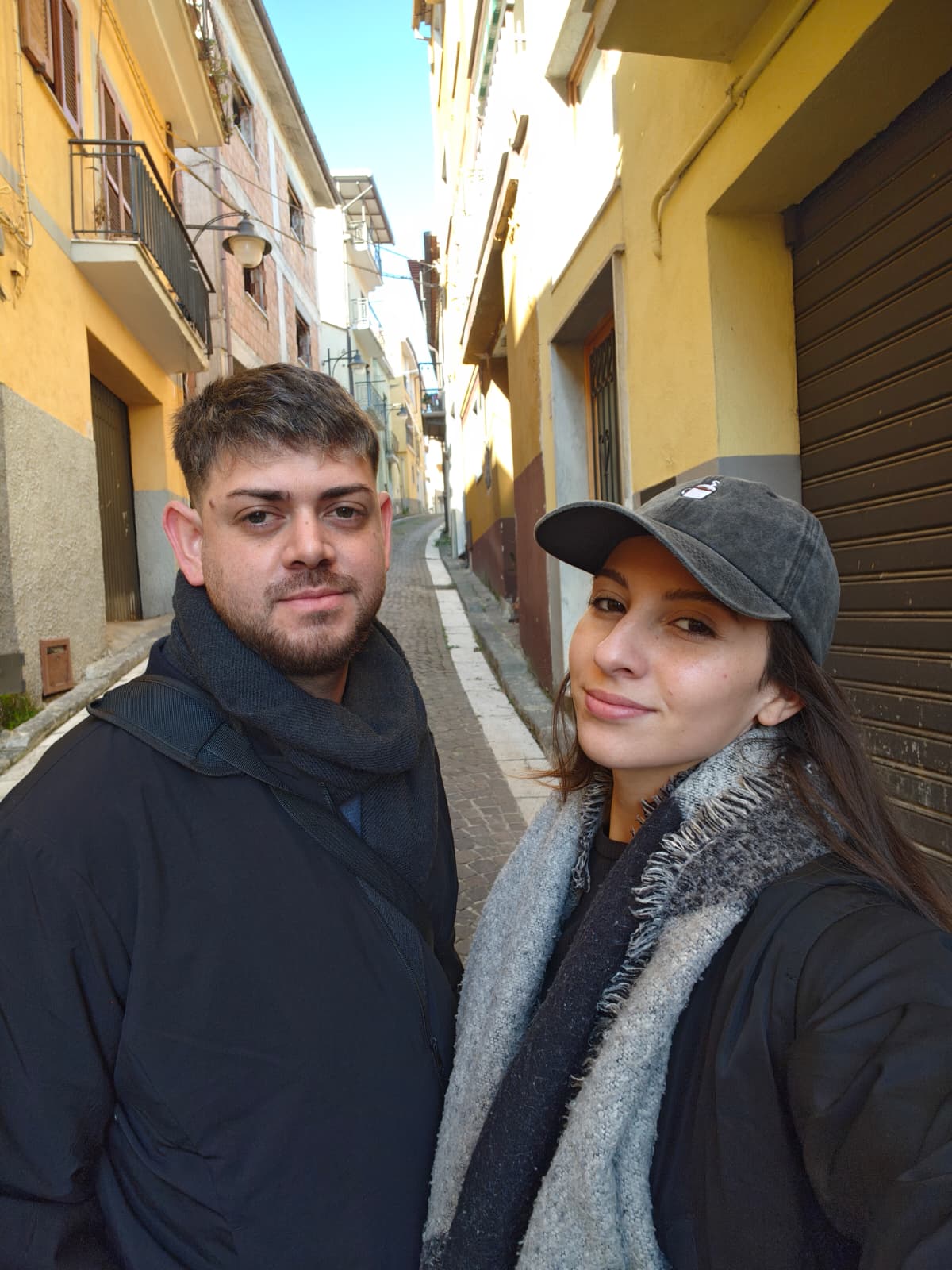

Bringing foreign citizens of Italian origin who want to rediscover their roots back to Italy, settling them in small villages with dwindling populations. This is the idea behind the Italie project by Asmel, the Association for Subsidiarity and Modernization of Local Authorities, composed exclusively of public bodies, which has developed a network that now includes over 4,500 local authorities throughout Italy. The project entered its operational phase a few months ago, with the first arrivals also featured in the short video above. Co-design with local communities is a key element of the project, with the aim of developing tailor-made solutions for each village, creating an inclusive and sustainable environment. In addition to promoting the integration of Italian descendants, the project aims to stimulate the economic and cultural growth of villages through new job and investment opportunities. Municipalities are showing great interest, partly due to the increasing difficulty companies are having in finding workers. A central element of the project in this regard is the ItaLink platform, an innovative tool that uses matching algorithms to facilitate encounters between citizens of Italian origin seeking employment and job opportunities offered by local businesses. The underlying intent is to contribute in a concrete way to the rebirth of the villages. In some cases, companies have advanced the first month’s rent to facilitate the arrival of foreign citizens. To date, Italie is active in Uruguay, Argentina, Brazil, the United States, Canada, and Venezuela. Driving Change interviewed a couple of young Uruguayans who had just arrived, Emiliano and Nicole, aged 27 and 26, who have been living in Atena Lucana, a village of about 2,500 inhabitants in the province of Salerno, since December.
Emiliano, what are your Italian origins?
My father was born in Ameglia, a small village near La Spezia, in 1932, and my maternal grandparents were born in Novara. He moved to Uruguay at the age of thirteen with his whole family to escape the war.
Can you tell us how you came up with the idea of coming to work in Italy?
Emiliano: My wife and I started talking about it in July 2024. I had a quiet job in Uruguay, I made deliveries with a truck, I had everything I needed, but I wanted to come here to get to know Italy, for a change of scenery. In Uruguay, everything is always the same, I wanted to start a new life. But it was difficult for us to come here on our own, because there are so many bureaucratic procedures to deal with.
Nicole: I started to consider moving mainly because all of Emiliano’s grandparents are Italian, so his family, including a cousin, still lives partly in Italy. In Uruguay, we had jobs and our own house, so no rent, which helped us have a slightly better lifestyle. I worked in a bar. We decided to come and see if we could improve our situation.
Did you like the idea of coming to Italy too, Nicole?
Yes, actually it was something I had been thinking about for a long time: coming to Europe to gain work and cultural experience and improve my life. So we decided to come to Italy.
How did you find out about the Italie project?
Emiliano: In August 2025. We thought it was the right opportunity to come to Italy. When they called me and told me there was a job and a house, we decided immediately. I had my first meeting with the project team in the truck I was driving.
Nicole: After the presentation of the project in Maldonado, Punta del Este, we immediately decided to move to Italy, because we realized that we could come not alone, but with a job and support for all the problems we would face.
How did it go when you left? Was there a moment when you felt resistance, when you thought about changing your mind?
Nicole: Not really. Of course, there were a lot of emotions, such as nostalgia and feelings, leaving everything you had built there, family, friends, it wasn’t easy. But we made a fairly clear decision, knowing that when we want to return to our country, there are people waiting for us.
How did your arrival in Italy go, and how is it going now?
Emiliano: It went well. In December, we did a bit of sightseeing and visited the country a little, because I only started working in January, and in the meantime we did the paperwork. It would have been very difficult on our own, without knowing the people, the offices, where to go, without knowing the system, everything could have come to a standstill.
Nicole: Arriving in Italy was wonderful. They made us feel welcome because they always accompanied us, and that helped us. I think that was the most important thing.
Where do you live?
Nicole: We are currently in Atena Lucana, in the province of Salerno, a town of about 2,500 inhabitants with a small craft industry and small workshops. Emiliano is passionate about engines and works for a company called Euromaster, in the tire industry. He is very happy.
Emiliano, how are you finding work?
The work itself is enjoyable and not too difficult. What is weighing on me a little is learning to keep up with the pace of work here; in Uruguay, it is more relaxed. And then, at the beginning, you need a lot of patience, not only to be trained in the practical side, but also in the theoretical side, because there is a reason for everything you do, and this needs to be explained. With the language barrier, the theoretical part is more difficult.
What about you, Nicole?
I should start working soon because my situation from a formal, legal point of view is different. I’ll be starting at a cleaning company in a resort in Cilento, in Basilicata, in Marina di Camerota, so I’ll have the opportunity to gain experience in a bar. It’s an hour away from Atena, but there’s convenient transportation: I’ll be able to take the bus because I don’t have a driver’s license yet.
What about the language barrier? How’s your Italian coming along?
Emiliano: Even though I didn’t speak Italian, I started studying it in Uruguay. My father passed away when I was very young, so I didn’t have the opportunity to speak Italian with him. I have a cousin who lives in Pontremoli, and I’ve had a few chats with her on the phone. Now I’m learning Italian at work, even though my boss speaks Spanish because he was born in Venezuela. I also have a Venezuelan colleague who speaks perfect Spanish and is teaching me lots of Italian words. However, it’s still difficult because I meet lots of people who don’t speak Spanish. I understand Italian well, but I still find it difficult to speak.
Nicole: I take a course once a week. I also try to talk to people in the village, but there aren’t many people…
How do you like Atena Lucana? Emiliano, would you have preferred to live in the places where your father was born?
Emiliano: I like it here, but we need a car because right now we have to walk 15 minutes each way with our shopping bags to get to the supermarket. I like it because it’s quiet. But in the future, yes, when I speak Italian well, I’d like to live, or at least spend some time, in the village where my father came from.
Nicole: I’m gradually settling in. I miss working so that I can complete my adaptation.
Has your life changed a lot compared to what you were doing in Uruguay?
Emiliano: There are many differences. The first is not having friends and family nearby. Certainly the fact that everything is a bit distant here, not living in a city. We lived in Montevideo, the capital of Uruguay, which is not very big, we all know each other, and everything is close by. Starting a new job is also a big change.
And how do you feel about the cuisine? Do you miss Uruguay’s?
Actually, Italian cuisine is not that different from Uruguayan cuisine. I only miss asado, the barbecued meat that they also make in Argentina…
Do you intend to stay in Italy for a long time, return to Uruguay, stay in Italy and go to Uruguay from time to time?
Emiliano: We would like to stay here for a long time. Of course, we’ve only just started, so I don’t know what I’ll say in six months’ time. Today, the idea is to go to Uruguay for holidays, and maybe in the future we’ll go back to live there.